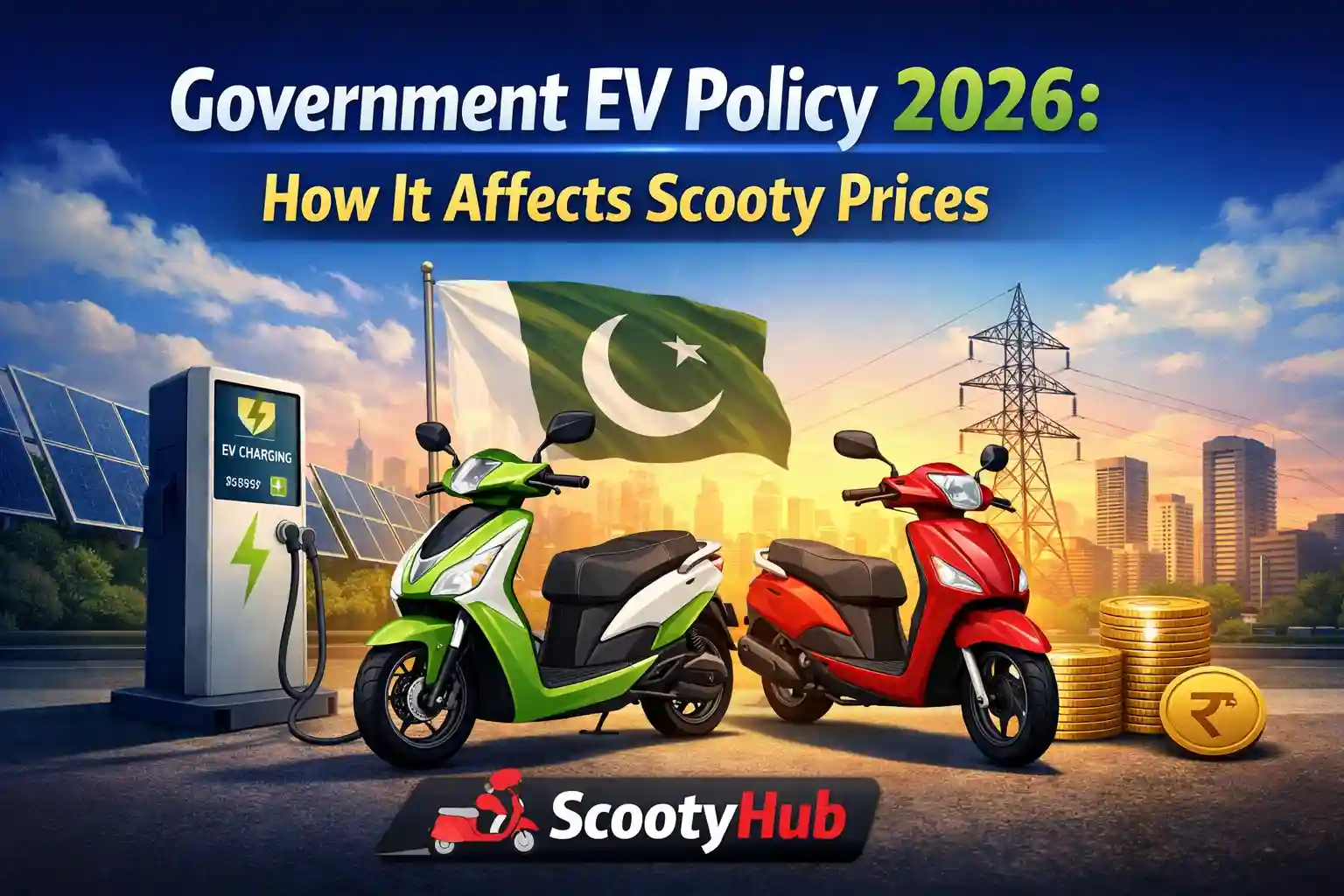
Electric vehicles (EVs) are rapidly reshaping the future of transportation in many countries — including Pakistan. One segment seeing particularly strong government focus is electric two-wheelers, commonly known as scooties, e-scooters, or e-bikes. The Government’s EV Policy 2026–30 introduces a suite of incentives, levies, and market reforms that have real impacts on how much these vehicles cost — both to buy and to own.
In this article, we’ll explain what the new policy is, why it matters, and how it affects scooty prices — written clearly for beginners and backed by up-to-date facts.
🔎 What Is the Government EV Policy 2026–30?
The Government of Pakistan has launched a formal policy for electric vehicles that runs from 2026 to 2030. This is often referred to as the Electric Vehicle Policy (or National EV Policy) and aims to:
- Transition vehicle sales toward electric models
- Reduce reliance on imported oil
- Create a cleaner, environmentally sustainable transport system
- Stimulate local EV manufacturing and infrastructure development
To accomplish this, the policy uses financial incentives and regulatory changes that influence prices, manufacturing, and operating costs of EVs — including scooties.
🧠 Why This EV Policy Matters for Scooty Buyers
Scooties — especially electric two-wheelers — are a high-volume market in Pakistan’s urban and peri-urban regions. They’re used by students, commuters, delivery riders, and everyday households for affordable, short-distance travel.
Because these vehicles are smaller and simpler than cars, small changes in pricing and duties can significantly affect affordability. EV Policy 2026 does exactly that by:
- Reducing taxes and import duties
- Offering direct subsidies
- Creating infrastructure support (e.g., charging subsidies)
- Imposing levies on fossil-fuel vehicles to encourage EV uptake
Let’s break down each of these areas.
🪙 Key EV Policy Elements That Impact Scooty Prices
1. Customs & Sales Tax Reductions
One of the biggest cost components in vehicle pricing is import duties and sales tax. The EV policy significantly reduces these for electric vehicles and components:
- 0%–1% customs duty on EV parts (including two-wheeler parts), making imports cheaper.
- 0%–1% sales tax on electric two-wheelers compared to much higher taxes on petrol scooters.
- Federal Excise Duty exemptions for EVs that further lower the sale price.
These incentives directly reduce the retail cost of EV scooties — and make locally assembled models more price-competitive.
What this means:
If a petrol scooter and an electric scooty had similar base prices, the EV could cost significantly less once lower taxes are applied. This translates to hundreds of thousands of rupees difference at the point of sale.
2. Direct Buyer Subsidies
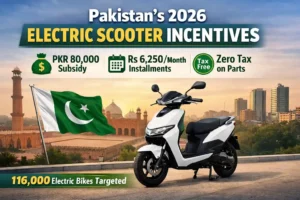
To further stimulate adoption, the government is offering cash subsidies on electric two-wheelers. Examples from recent policy announcements include:
- Subsidy applied directly to purchasers of electric bikes
- Financial incentives for a set number of electric scooters in early rollout phases
These subsidies reduce the upfront sticker price buyers pay — sometimes by a substantial margin compared to pre-policy pricing.
Bottom line:
Subsidies make electric scooties more affordable upfront — a crucial advantage since electric vehicles often cost more initially than equivalent petrol scooters.
3. EV Adoption Levy on Petrol Vehicles
To fund these incentives sustainably, the government introduced a levy on gasoline-powered vehicles:
- A tiered fee on conventional vehicles (e.g., 1%–3% based on engine size)
- Designed to make petrol scooters relatively more expensive in comparison
This levy doesn’t directly tax electric scooties, but by increasing the relative cost of petrol scooters, it indirectly boosts the appeal of EV alternatives.
4. Charging Cost Subsidies
The policy also tackles the operating cost of EVs with measures such as:
- A subsidized electricity rate for EV charging (e.g., lowering cost per unit from ~Rs 92 to ~Rs 39).
- This reduction makes charging electric scooties cheaper than filling petrol scooters — improving overall value for consumers.
Lower operating costs don’t reduce the upfront price, but they make electric scooties far more economical over time — especially for daily commuters.
📉 How These Policy Elements Affect Scooty Prices (Real-World Impact)
👉 Upfront Cost Reduction
With the combined effect of lower duties, tax exemptions, and subsidies, electric scooties can be priced:
- Significantly lower than before the policy era
- Often comparable to, or even cheaper than, equivalent petrol scooters
In practical terms, where an electric scooty may previously have cost Rs. 250,000–300,000, subsidies and incentives can shave off tens of thousands to over Rs. 80,000 depending on the model and subsidy program — making them far more competitive with petrol peers.
👉 Total Cost of Ownership
Even if upfront prices for some models remain higher than petrol scooters:
- Charging costs per km are much lower than fuel costs
- Maintenance costs for electric drivetrains are typically lower
- Government incentives reduce insurance and registration fees in some provinces
This means electric scooties can offer a lower total cost over their useful life, particularly for high-usage riders (e.g., delivery drivers).
📌 What Beginners Should Know Before Buying
If you’re considering an electric scooty under this policy:
✅ Check whether the model qualifies for subsidies
Government lists and quotas may change over time.
✅ Understand charging infrastructure access in your area
Subsidized charging helps, but you still need convenient access.
✅ Compare total cost of ownership
Upfront price (after subsidy) + charging costs + maintenance vs petrol scooter fuel and servicing.
✅ Look for local assembly/manufacturer deals
Locally assembled EVs often receive better tax treatment and support.
⚖️ Challenges & Considerations
Despite strong policy support, there are ongoing challenges:
- Charging infrastructure — while subsidized — is still growing
- Battery quality and replacement costs may vary between brands
- Supply constraints and dealer pricing strategies can affect retail prices
In short, while policy incentives make electric scooties cheaper, buyers should still do model-by-model comparisons before purchase.
Also Read: Electric Scooty Charging Time and Cost in Pakistan — Complete 2026 Guide
🧠 Final Takeaway
The Government EV Policy 2026–30 represents a major shift in how scooties are priced and sold in Pakistan. By lowering taxes, offering subsidies, and subsidizing charging costs, the policy makes electric scooties more affordable upfront and cheaper to operate over time.
For consumers who ride daily or care about long-term savings and sustainability, electric scooties are now better value than ever before — provided one understands how policy incentives apply in practice.
If you’re thinking about buying one, now is a great time to explore EV options with careful comparison and subsidy eligibility checks.