Electric scooties are no longer a niche product in Pakistan. Rising fuel prices, congested urban traffic, and growing awareness of running costs have pushed many commuters toward electric two-wheelers. While electric scooties are cheaper to operate than petrol bikes, the upfront purchase price can still be difficult for students, salaried professionals, and small-business owners.
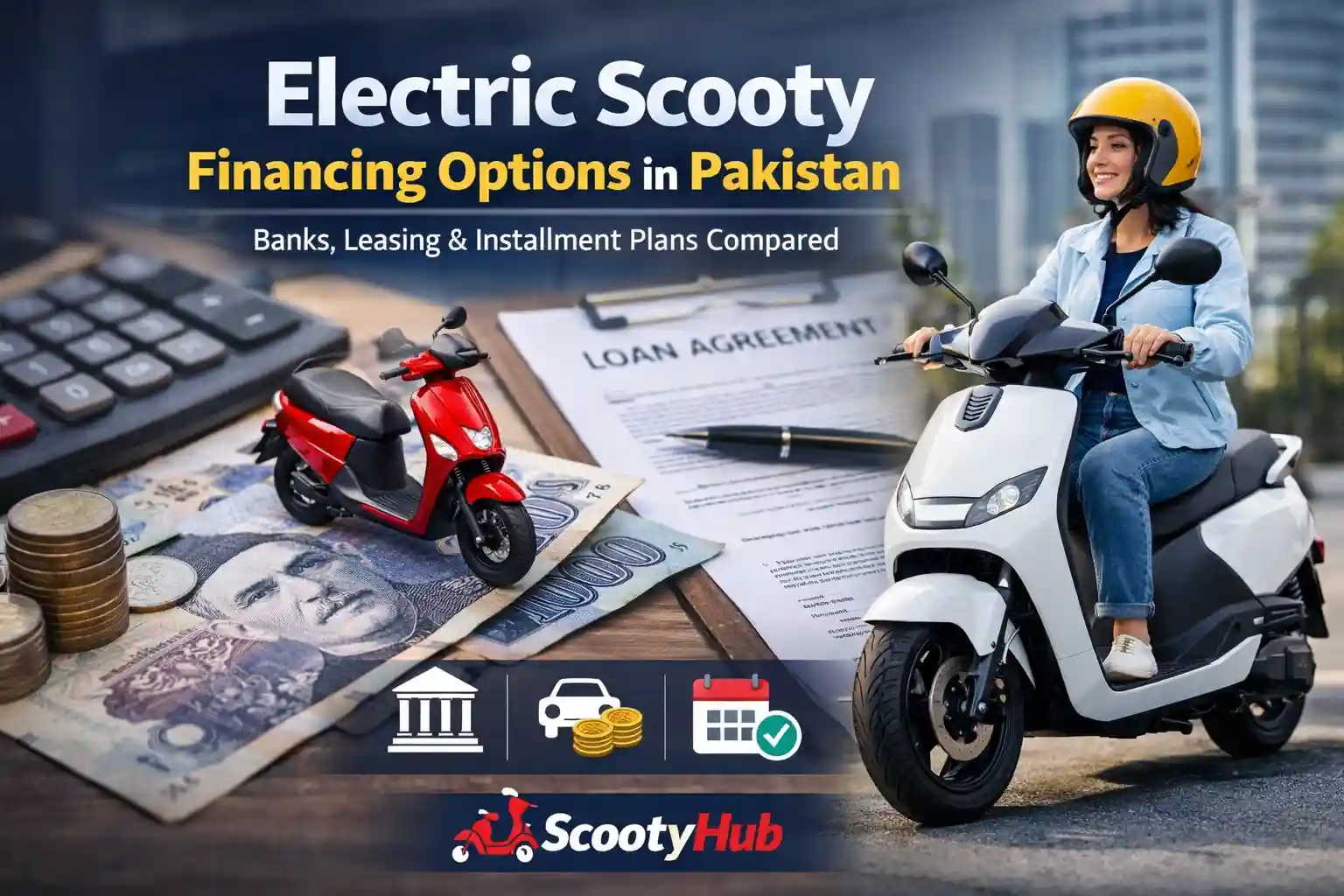
This is where financing becomes relevant. Over the past few years, banks, non-banking finance companies (NBFCs), leasing firms, and even manufacturers have introduced installment-based options for electric scooties. However, these options differ widely in cost, eligibility, documentation, and long-term ownership impact.
This guide explains electric scooty financing options in Pakistan in a clear, neutral, and beginner-friendly way. It compares banks, leasing companies, and manufacturer installment plans so you can choose a solution that fits your income, usage, and risk tolerance.
Why Financing Matters for Electric Scooties
Electric scooties typically cost more upfront than used petrol bikes, even though they are cheaper to run over time. Financing helps spread this initial cost into manageable monthly payments while allowing immediate ownership or use.
Common reasons buyers choose financing include:
- Limited savings for a lump-sum purchase
- Predictable monthly budgeting through fixed EMIs
- Faster access to transport for work or education
- Avoiding high fuel expenses from day one
However, financing also adds interest, processing fees, and contractual obligations. Understanding each option clearly is essential before committing.
Overview of Electric Scooty Financing Options in Pakistan
At present, electric scooty buyers in Pakistan generally have three financing routes:
- Bank Financing (Auto or Personal Loan Based)
- Leasing Companies and NBFCs
- Manufacturer or Dealer Installment Plans
Each option serves a different type of buyer. Below is a detailed, side-by-side explanation based on real-world practices in Pakistan.
Bank Financing for Electric Scooties
How Bank Financing Works
Most Pakistani banks do not yet offer dedicated electric scooty loans. Instead, buyers usually finance scooties through:
- Personal loans
- Consumer auto loans (limited cases)
The bank pays the seller upfront, and the buyer repays the bank in monthly installments with interest.
Typical Eligibility Criteria
- Valid CNIC
- Proof of income (salary slips or bank statements)
- Stable employment or business history
- Good credit history
Down Payment and Tenure
- Down payment: Usually 20%–40% (varies by bank)
- Tenure: 12 to 36 months
Pros
- Transparent pricing and regulated contracts
- Lower interest rates compared to informal financing
- Clear ownership terms
Cons
- Strict eligibility requirements
- Longer approval process
- Limited availability for students or informal workers
Best for: Salaried professionals with documented income and existing bank relationships.
Leasing Companies and NBFCs
How Leasing Works
Leasing companies purchase the scooty and lease it to the user for a fixed period. Ownership usually transfers to the user after the final payment.
In Pakistan, leasing is commonly used for motorcycles and is increasingly applied to electric scooties.
Eligibility Requirements
- CNIC and basic identity verification
- Proof of income (formal or informal)
- Guarantor in some cases
Payment Structure
- Down payment: 25%–40%
- Monthly installments: Fixed
- Tenure: 12 to 36 months
Pros
- Easier approval than banks
- Suitable for self-employed and small traders
- Faster processing
Cons
- Higher total cost due to mark-up
- Scooty may remain under company ownership until full payment
- Penalties for late payments can be strict
Best for: Self-employed individuals and buyers who do not meet bank criteria.
Manufacturer and Dealer Installment Plans
How These Plans Work
Some electric scooty brands and dealers in Pakistan offer in-house installment plans. These are usually arranged directly at the showroom without bank involvement.
Common Requirements
- CNIC
- Basic verification
- Post-dated cheques or guarantor (varies by dealer)
Payment Structure
- Down payment: 30%–50%
- Tenure: 6 to 24 months
Pros
- Quick approval
- Minimal paperwork
- Accessible to students and first-time buyers
Cons
- Shorter repayment periods
- Higher monthly installments
- Limited consumer protection compared to banks
Best for: Buyers who need fast approval and cannot qualify for formal financing.
Comparison: Banks vs Leasing vs Dealer Installments
| Feature | Banks | Leasing Companies | Dealer Installments |
| Approval Speed | Slow | Medium | Fast |
| Interest / Mark-up | Lower | Medium–High | Often Higher |
| Documentation | Strict | Moderate | Minimal |
| Ownership | Buyer | After final payment | Varies |
| Best For | Salaried individuals | Self-employed | Students / new earners |
Hidden Costs to Watch Out For
Regardless of financing type, buyers should ask about:
- Processing and documentation fees
- Late payment penalties
- Insurance or tracker charges
- Early repayment penalties
These costs can significantly increase the total price of the scooty.
Practical Tips Before Choosing a Financing Option
- Calculate the total payable amount, not just the monthly installment
- Compare at least two financing sources
- Ensure installment amounts align with your monthly income stability
- Read ownership and default clauses carefully
- Avoid committing to installments longer than the battery warranty period
Is Financing an Electric Scooty a Good Idea?
Financing can make sense if:
- You need immediate transport
- Monthly installments are comfortably affordable
- You plan to use the scooty daily to offset fuel savings
It may not be ideal if:
- Income is unstable
- Installments exceed 30% of monthly earnings
- Total payable amount is significantly higher than cash price
Conclusion
Electric scooty financing in Pakistan is evolving, with banks, leasing companies, and dealers each offering different solutions. There is no single best option—only the option that best matches your financial profile and usage needs.
For buyers with documented income, bank financing offers the most structured and transparent route. Leasing companies provide flexibility for self-employed individuals, while dealer installment plans offer speed and accessibility for first-time buyers.
By understanding how each financing model works and comparing total costs carefully, buyers can make informed, low-risk decisions and enjoy the long-term savings that electric mobility offers.