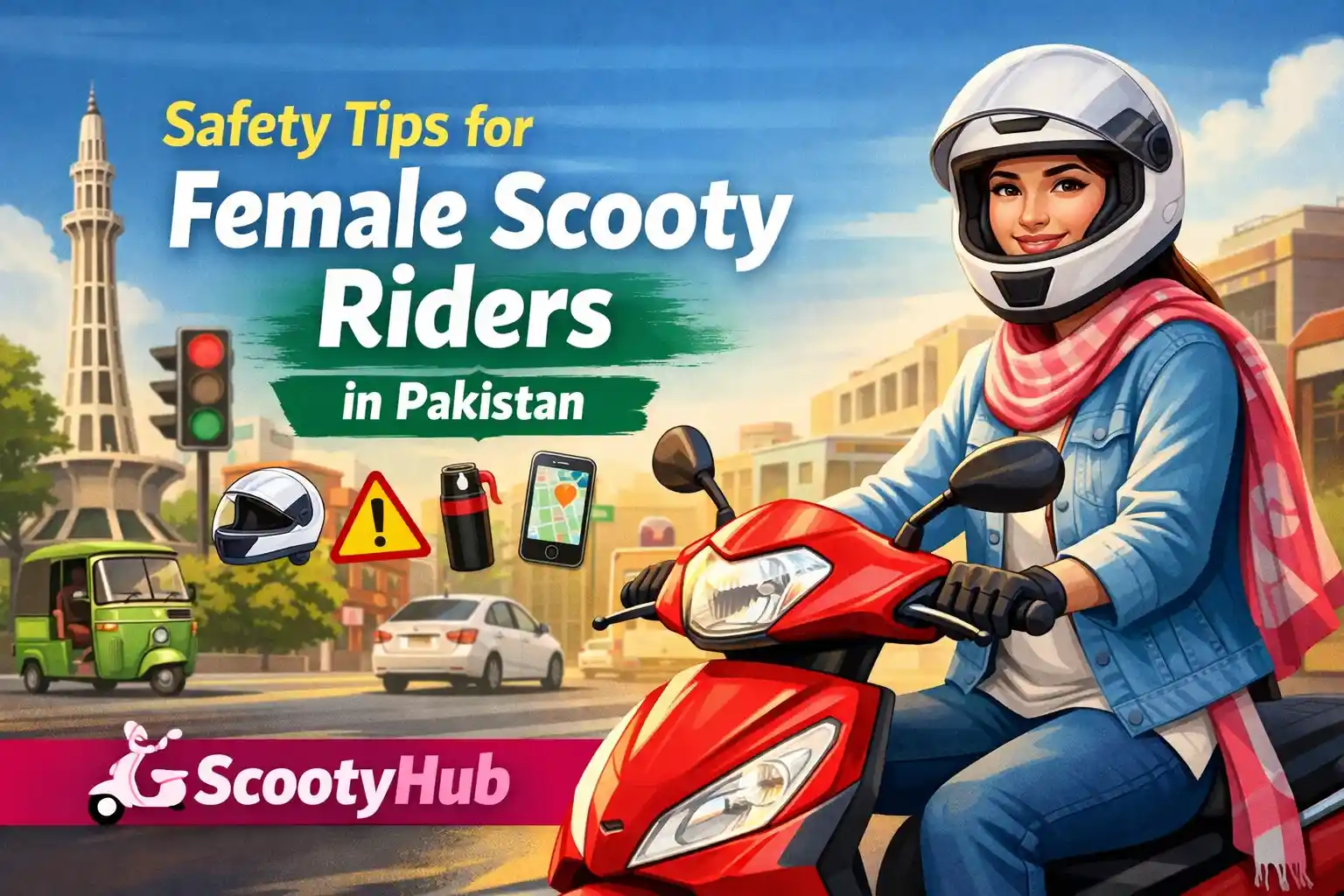
Scooties are rapidly becoming a preferred mode of transport for women across Pakistan. From Karachi and Lahore to Rawalpindi, Faisalabad, and smaller cities, scooty offers affordability, fuel efficiency, and independence—especially for students, working women, and homemakers.
However, riding a scooty in Pakistan comes with unique challenges: mixed traffic, poor road conditions, weak lane discipline, unpredictable drivers, and personal safety concerns. This article is written with real-world Pakistani riding conditions in mind, providing practical, experience-based safety guidance for female scooty riders.
Why Safety Is Especially Important for Female Riders in Pakistan
Scooty safety in Pakistan goes beyond accidents. It also involves:
- Navigating aggressive traffic
- Dealing with poor infrastructure
- Protecting personal safety
- Managing unpredictable road behavior
Women often ride during peak hours, on narrow roads, and sometimes without proper riding culture around them. Smart preparation makes a huge difference.
Choosing the Right Scooty for Pakistani Roads
1. Pick a Scooty That Matches Your Height and Strength
Pakistani roads often require frequent stopping, balancing, and maneuvering.
Look for:
- Low seat height (feet should touch ground easily)
- Lightweight body (easy control in traffic)
- Smooth acceleration
- Stable suspension for uneven roads
A heavy or tall scooty increases fall risk at signals, U-turns, and potholes.
2. Ground Clearance Matters in Pakistan
Speed breakers, damaged roads, and water-filled potholes are common.
Higher ground clearance helps:
- Prevent underbody damage
- Maintain balance on broken roads
- Ride confidently in rain
Essential Safety Gear for Female Scooty Riders in Pakistan
3. Helmet Is a Must—Legally and Practically
Helmet laws exist in most major cities, but enforcement varies. Regardless, wearing a helmet is critical.
Choose a helmet that:
- Is certified (DOT/ECE)
- Fits properly
- Has good ventilation (important in Pakistani heat)
- Offers full-face protection
Head injuries are one of the leading causes of death in two-wheeler accidents in Pakistan.
4. Clothing Choices That Improve Safety
In Pakistan, traditional clothing is common—but loose fabric can be risky.
Safety-friendly clothing tips:
- Secure dupattas properly
- Avoid loose scarves near wheels
- Wear closed shoes (avoid chappals)
- Prefer full sleeves and trousers
Many accidents happen due to fabric getting caught in wheels or chains.
Learning Riding Skills Before Entering Busy Roads
5. Practice in Low-Traffic Areas First
Before riding on main roads:
- Practice braking smoothly
- Learn U-turns and tight turns
- Control balance at slow speeds
- Use indicators confidently
Start in empty streets or early mornings.
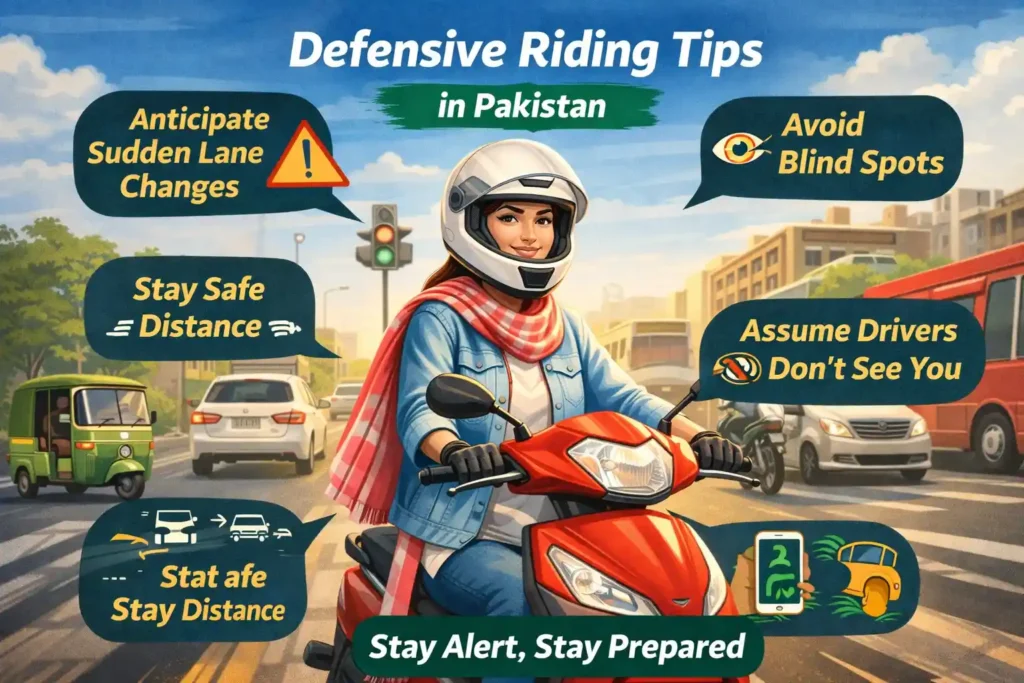
6. Defensive Riding Is Essential in Pakistan
Traffic discipline is inconsistent.
Defensive riding means:
- Expect sudden turns from cars and rickshaws
- Watch for pedestrians crossing anywhere
- Keep distance from buses and trucks
- Avoid riding alongside heavy vehicles
Never assume other drivers will follow rules.
Handling Pakistani Traffic Safely
7. Mixed Traffic Awareness
Pakistani roads include:
- Cars
- Rickshaws
- Buses
- Motorcycles
- Pushcarts
- Pedestrians
Safety tips:
- Stay visible
- Avoid zigzag riding
- Maintain steady speed
- Use horn responsibly
- Avoid unnecessary overtaking
8. Signal and Intersection Safety
Most accidents occur at intersections.
- Slow down at crossings
- Watch for signal jumpers
- Be cautious of wrong-way riders
- Make eye contact with drivers when possible
Road Conditions and Weather Challenges in Pakistan
9. Common Local Road Hazards
- Potholes after rain
- Open manholes
- Loose gravel
- Broken speed breakers
- Water-filled roads
Always scan the road ahead.
10. Riding During Rain and Monsoon Season
Monsoon season increases accident risk.
Rain riding tips:
- Reduce speed
- Avoid sudden braking
- Keep extra distance
- Avoid metal covers and tiles
- Use rain tires if possible
Wet Pakistani roads are extremely slippery.
Personal Safety Tips for Women Riding Scooties in Pakistan
11. Route Planning and Timing
- Prefer main roads with traffic
- Avoid isolated areas, especially after Maghrib
- Inform family of late rides
- Trust your instincts
12. Safety at Signals and Stops
- Stay alert at red lights
- Avoid engaging with strangers
- Keep moving if uncomfortable
- Stay confident and aware
13. Emergency Essentials for Pakistani Riders
| Item | Why It Matters |
| Charged phone | Emergency calls |
| Emergency contacts | Quick support |
| Small first-aid kit | Minor injuries |
| Safety alarm/pepper spray* | Personal protection |
(*Use according to local laws.)
Preparedness improves confidence and peace of mind.
Scooty Maintenance for Pakistani Conditions
14. Weekly Checks (Very Important)
- Brakes (dust reduces performance)
- Tire pressure (low pressure is common)
- Lights and indicators
- Mirrors
- Horn
15. Regular Servicing Benefits
- Prevent breakdowns on busy roads
- Improve fuel efficiency
- Increase braking reliability
- Handle rough roads better
Poor maintenance is a major cause of accidents.
Common Mistakes Female Riders Should Avoid
16. Risky Habits Seen Frequently
- Riding without helmet
- Using mobile phone while riding
- Wearing loose dupattas
- Overloading grocery bags
- Riding while tired or stressed
Avoiding these habits greatly improves safety.
Emergency Handling Skills Every Rider Should Learn
17. Emergency Braking on Pakistani Roads
- Use both brakes gently
- Avoid sudden front brake lock
- Keep body straight
18. Handling Skids on Sand or Wet Roads
- Stay calm
- Release brakes slowly
- Regain balance gradually
Practice these skills in empty areas.
Building Confidence as a Female Rider in Pakistan
19. Confidence Grows With Experience
- Ride daily, even short distances
- Start during low-traffic hours
- Ignore negative comments
- Focus on skill, not speed
- Consider riding lessons if needed
Confidence is learned, not inherited.
Traffic Laws and Legal Awareness in Pakistan
20. Know the Rules
- Carry valid driving license
- Keep registration documents
- Wear helmet where required
- Follow speed limits
- Respect pedestrians
Legal awareness reduces stress and fines.
Also Read: Electric Scooty Charging Time and Cost in Pakistan — Complete 2026 Guide
Conclusion: Safe Riding Is Freedom for Pakistani Women
Scooty riding in Pakistan offers independence, mobility, and empowerment. Safety is not about fear—it is about smart preparation, awareness, and confidence.
By choosing the right scooty, wearing proper gear, riding defensively, staying alert, and maintaining your vehicle, you can ride safely and confidently every day.
A skilled rider is a safe rider.
Frequently Asked Questions (FAQs)
1. Is scooty riding safe for women in Pakistan?
Yes, with proper safety gear, defensive riding, and route awareness, scooty riding is safe and practical for women in Pakistan.
2. Is wearing a helmet compulsory in Pakistan?
Helmet laws vary by city, but wearing a helmet is strongly recommended everywhere for safety.
3. What is the best time for beginners to practice riding?
Early morning or late afternoon when traffic is lighter is ideal.
4. How can women stay safe while riding alone?
Use busy routes, stay alert, carry emergency contacts, and avoid isolated areas.
5. Are scooties suitable for Pakistani road conditions?
Yes, especially models with good suspension and ground clearance designed for local roads.