Introduction: Why So Many Pakistanis Are Skipping Banks in 2026
Fuel prices keep climbing. Traffic keeps getting worse. And for many Pakistanis—especially students, freelancers, and women commuters—a scooty is no longer a luxury. It’s a necessity.
But there’s a problem.
Not everyone qualifies for a bank loan. Some don’t have salary slips. Others don’t want the paperwork, delays, or rejections that come with traditional financing.
That’s why scooty financing without a bank has exploded across Pakistan in recent years.
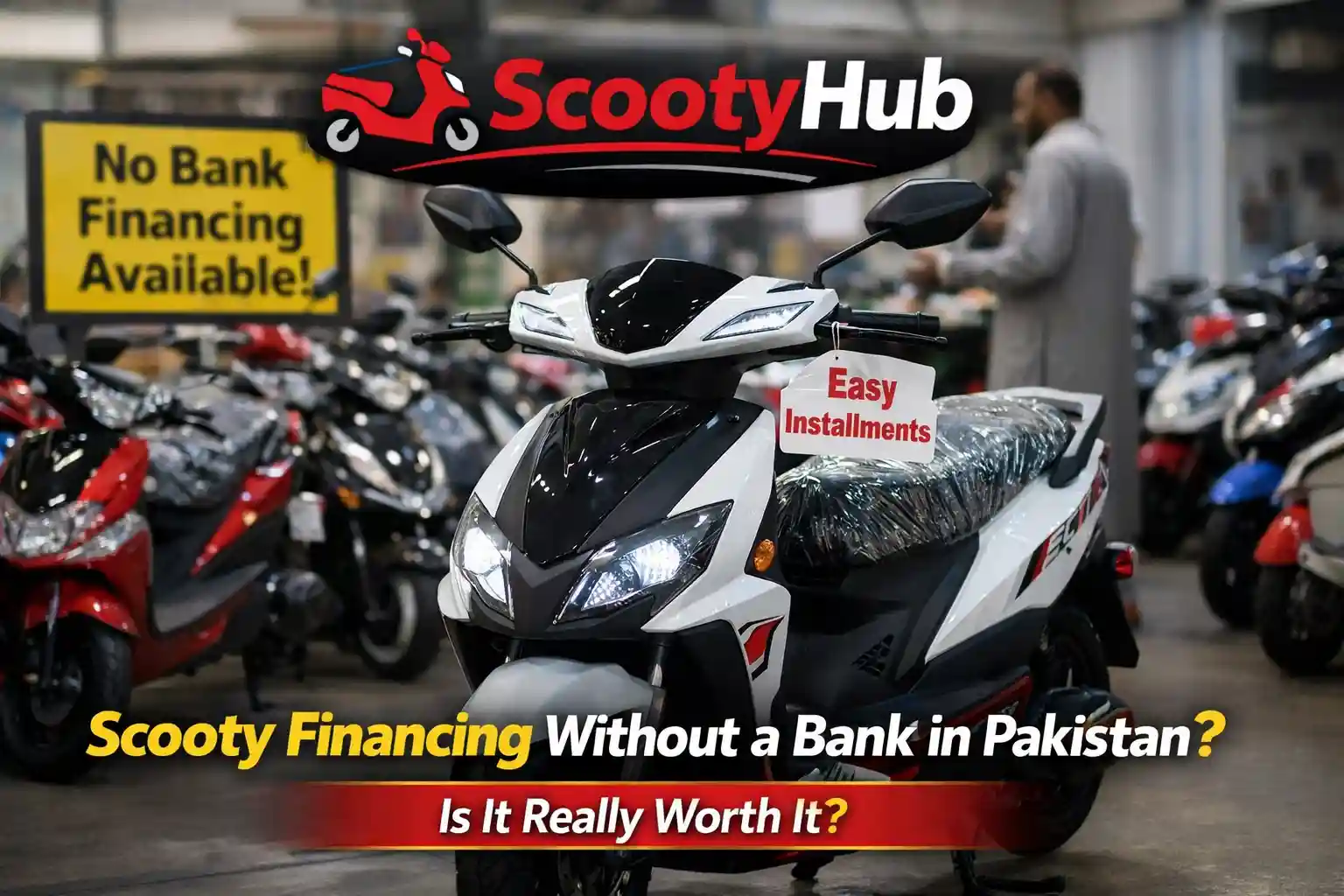
Walk into almost any showroom today, and you’ll hear the same promise:
“No bank, easy installments, quick delivery.”
It sounds perfect—but is it really safe, affordable, and worth it?
This guide breaks down what dealer-based scooty financing actually looks like in real life, what most sellers don’t explain upfront, and how you can protect yourself before signing anything.
Updated for 2026: This article reflects current dealer practices, pricing trends, and buyer experiences across major Pakistani cities.
Quick Takeaways: Read This Before You Go Further
- Dealer scooty financing is faster, but usually more expensive
- Down payments are often 35%–50%, especially for electric scooties
- Dealers may keep ownership documents until full payment
- Late payments can lead to penalties—or repossession
- Written agreements matter more than verbal promises
If you’re short on time, remember this:
Convenience is high. Protection is not.
So, What Exactly Is Scooty Financing Without a Bank?
Scooty financing without a bank means buying a scooty on installments directly from a dealer, brand outlet, or leasing partner, without involving a commercial bank.
In this setup:
- The dealer becomes the lender
- You pay installments straight to the showroom or partner company
- Approval is quick, sometimes same day
- Requirements are relaxed—but costs are higher
This model is especially popular for:
- Electric scooties
- First-time buyers
- People without formal income proof
The 3 Most Common Non-Bank Financing Options in Pakistan
1. Dealer Installment Plans (Most Popular)
This is what most people mean when they say “installments without bank.”
How it usually works:
- You choose a scooty
- Pay a large down payment
- Agree on monthly installments
- Dealer delivers the scooty quickly
Reality check:
The dealer earns profit through higher total pricing, not “interest.”
Best for:
Buyers who need speed and flexibility.
2. Brand or Manufacturer-Backed Financing
Some established brands partner with leasing companies.
What’s different here:
- Slightly better documentation
- More structured contracts
- Clearer installment schedules
Best for:
Buyers who want fewer surprises and more accountability.
3. Informal or Agent-Based Financing (High Risk)
This includes unregistered agents or private individuals.
⚠️ Be careful:
No paperwork often means no protection.
Who Actually Qualifies for Dealer Scooty Financing?
One reason dealer financing is booming is simple: almost anyone can qualify.
Common Requirements You’ll Be Asked For
- CNIC (original + copy)
- 2 passport-size photos
- Proof of residence (utility bill or rent agreement)
- Mobile number registered on CNIC
- Post-dated cheques or a guarantor
Sometimes Required (Depends on Dealer)
- Salary slip (if salaried)
- Business card or shop photo
- Small security deposit
👉 Good to know:
Most dealers do not check bank statements or credit history.
Down Payment Reality: This Is Where Most Buyers Are Shocked
Dealer financing almost always requires a higher down payment than banks.
Typical Down Payment Trends (2026)
| Scooty Type | Average Down Payment |
| Petrol Scooty | 30%–40% |
| Electric Scooty | 35%–50% |
Electric scooties usually require more upfront because:
- Battery cost is high
- Resale risk is higher for dealers
Installments That Look Cheap—but Aren’t
Many buyers focus only on the monthly installment. That’s a mistake.
Real-Life Example
| Payment Type | Amount |
| Cash Price | PKR 300,000 |
| Dealer Installments (12 months) | PKR 360,000 |
That extra PKR 60,000 is not magic.
It’s markup, even if the dealer avoids calling it interest.
“No Interest” Doesn’t Mean No Extra Cost
Dealers often use phrases like:
- “Fixed price”
- “Installment price”
- “Company profit”
But here’s the truth:
If the installment price is higher than the cash price, you are paying financing charges—just packaged differently.
This matters for:
- Budget planning
- Early payment decisions
- Religious or ethical concerns
Why People Still Choose Non-Bank Scooty Financing
Despite the risks, dealer financing exists for a reason.
The Real Benefits
1. Speed
Approval can take hours, not weeks.
2. Simple Paperwork
No tax filer status. No bank visits.
3. Inclusive
Freelancers, students, and women buyers are welcomed.
4. Electric Scooty Friendly
Banks often avoid EVs. Dealers don’t.
The Hidden Risks Most Dealers Never Mention
This is where buyers get into trouble.
1. You May Not Fully Own the Scooty Yet
Many dealers:
- Keep the registration card
- Delay transfer until last installment
Miss payments—and the scooty can be taken back.
2. Late Payment Penalties Add Up Fast
Penalties are often:
- Poorly explained
- Not clearly written
- Strictly enforced
One missed installment can snowball.
3. Weak Legal Standing
If your agreement is vague—or verbal—resolving disputes becomes extremely difficult.
What Buyers Commonly Experience in Real Life
Based on patterns seen across Pakistani cities:
- Buyers are happy at delivery—but shocked at total cost later
- Verbal promises don’t always match written terms
- Electric scooty buyers find dealer financing easier than banks
- Problems usually start after missed installments
Experience matters. Read every line.
How to Protect Yourself Before Signing Anything
Do These 5 Things—No Exceptions
- Demand a written agreement
- Confirm total payable amount
- Clarify ownership & registration
- Ask about late payment penalties
- Get receipts for every payment
Never rush just because delivery is fast.
Bank Loan vs Dealer Installments: A Quick Reality Check
| Feature | Bank Financing | Dealer Financing |
| Approval Time | Slow | Very fast |
| Documentation | Heavy | Light |
| Total Cost | Lower | Higher |
| EV Acceptance | Limited | High |
| Legal Protection | Strong | Moderate |
If you qualify for a bank loan, it’s usually cheaper.
If you don’t, dealer financing fills the gap—with conditions.
So… Is Scooty Financing Without a Bank Worth It?
The honest answer: it depends on your situation.
It works well if:
- You don’t qualify for banks
- Need transport urgently
- You understand the total cost
It becomes a problem if:
- You ignore paperwork
- Miss installments
- You trust verbal promises
Used wisely, it’s a tool. Used blindly, it’s a trap.
Also Read: Scooty Registration Charges in Pakistan: Complete Breakdown
Final Thoughts: Convenience Should Never Replace Clarity
Dealer-based scooty financing has helped thousands of Pakistanis get mobile—but mobility should not come at the cost of confusion.
Ask questions. Read documents. Compare options.
A scooty should give you freedom, not financial stress.
Frequently Asked Questions (FAQs)
Can I really buy a scooty on installments without any bank involvement?
Yes. Many dealers offer direct installment plans without banks, though guarantors or cheques may be required.
Is dealer scooty financing halal?
Some dealers use fixed pricing instead of interest. Buyers should review contracts carefully and consult a scholar if needed.
What happens if I miss an installment?
Late fees may apply, and repeated defaults can lead to repossession. Policies vary by dealer.
Is electric scooty financing easier than petrol?
Yes. Dealers are generally more open to financing electric scooties than banks.
Can I clear dealer installments early?
Some dealers allow early payment, others charge penalties. Always confirm in writing.